
Superstitions in India and Scientific logics

Superstitions in India and Scientific Logics Behind Them.

 
India is a land of diversities. It is a land where people of different lifestyle, religion, culture and beliefs live together. In spite of all these diversities they live together with a bond of brotherhood and humanity. Generally people of India follows their great old culture which makes them tolerant in nature. It is a land of rich cultural heritages which makes it famous for. Hindi is the mother tongue of India however many other dialects and languages are spoken by the people of different religion and region of India. People are wound to their concerned religion with body and soul. They visit their worshipping places and offer prayers to their deities.
But this faith in their religion sometimes take a form of superstition. Lets have a look on some from "Kaali Billi Rasta Kaat Gai to Nimbu Mirchi Totka".
  • Black Cat Crossing Path: In India when a black cat crosses your path it is considered a bad omen. In India black color is linked to Lord Shani, it is believed that when a black cat crosses your path if you are going to any work it brings bad luck for you. To overcome this you should let somebody else to cross the path before you so that the person have all the bad luck and you will not.
  • Nazar Utaarna: In India mostly mothers put a black dot on their child's cheek, behind their ear or under their feet. Logic behind this black spot is that due to this spot their child look ugly and no buddy talk ill about their child. It is called nazar utaarna.
  • Not to Eat or Step Out During Eclipse: In India it is believed that during Eclipse one should not get outside their workplace or home and should not eat any food. Logic behind this is during eclipse emission of UV rays are high which can harm you.
  • Bathe after Attending a Funeral Ceremony: In ancient time our ancestors do not have such vaccinations to cure deadly and infectious diseases. So they took a thorough bathe as a dead body easily get affected by bacteria and microbes and you never know what infections are lurking around.
  • Not to Cut Nails After Sunset: At that time there was no electricity in the villages and people cut their nails with blade and scissors sometimes. It is very risky to use sharp blades in the night as it can harm. So to avoid hurting yourself it was told not to cut nails during night or evening time.
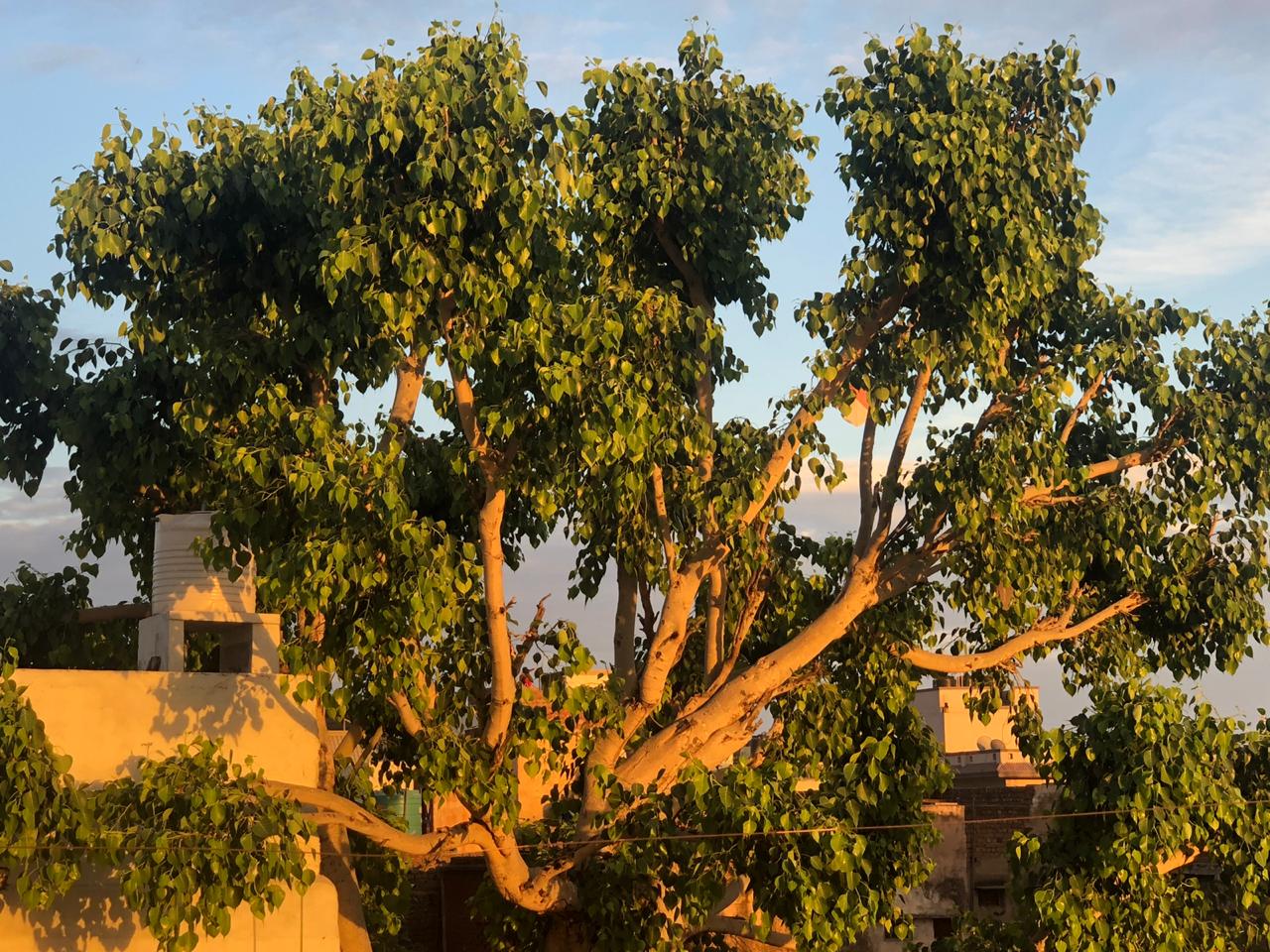
  • Do not Go Near Peepal Tree in The Night Time: It is believed that ghosts reside on Peepal Tree but the reason is that peepal tree exhales Carbon Dioxide during night time which is harmful for human beings.
  • Twitching of Eyes: It is considered as good luck in some culture an bad in some. It differs according to gender as well. However the logic behind this is, it happens due to lot of stress, strain, tiredness and alcohol.
  • Not to chew Tulsi Leaves : Logic behind this is Tulsi leaves contains Arsenic which is harmful for teeth and gums. That is why it is said Tulsi leaves should be swallowed not chewed.

                                  Thanks, Have a Great and Wonderful Day... God Bless ♥♥♥

Comments

Post a Comment

Please do not enter any spam link in the comment box.

Popular posts from this blog

Stone Age

Stone Age Stone age or level of human development is characterized by creation and use of tools made from stone. At that point early man wont to make their tools for his or her hunting purpose with the assistance of stones. Stone age was divided into 3 different periods. Paleolithic Period Mesolithic Period Neolithic Period The period lasted for roughly 3.4 million years. The three stage system was proposed by Astley john Hilary Goodwin in 1929.People of stone age did not have the facilities of turning on TV nor they have telephones or mobiles. In todays tech era fire tools are not a matter of surprise for us but in the early stage when these tools were not present it was a big concern, how to make fire. Stone age man was totally depend upon natural explanation for fire. In stone age early man do not have fire making skills they eat raw things until fire was invented. They did not cook food. What did stone age people eat? Stone age people lived as hunters and gatherers...

Top Scholarships for Indian Students After 10th & 12th (2025 List)

Top Scholarships for Indian Students After 10th & 12th (2025 List) Worried about the cost of higher education? Good news! There are several scholarships in India that help meritorious and needy students pursue further studies after Class 10 and 12. Here's a list of the most popular and beneficial scholarships you can apply for in 2025. 📘 Scholarships After 10th 1. National Means-cum-Merit Scholarship (NMMS) Who Can Apply: Students of Class 8 from government schools Award: ₹12,000 per year (till Class 12) Eligibility: Family income below ₹3.5 lakh/year, minimum 55% marks 2. Kishore Vaigyanik Protsahan Yojana (KVPY) Who Can Apply: Science stream students (Class 11 & onward) Award: Monthly stipend + annual grant Conducted by: Department of Science and Technology (DST), Govt. of India 3. Pre-Matric Scholarship for SC/ST/OBC Students Offered by: State and Central Governments Eligibility: SC/ST/OBC category students, low-income fami...

Excel Basics for Beginners

Excel Basics for Beginners – A Step-by-Step Guide Microsoft Excel is a powerful spreadsheet tool used across industries for data entry, calculations, analysis, and visualization. This beginner-friendly guide covers the basic features, terms, and tips to help you start using Excel with confidence. 📌 What is Excel? Excel is a spreadsheet program developed by Microsoft. It allows users to organize data in rows and columns, perform mathematical calculations, create charts, and manage large data sets efficiently. 🧱 Basic Components of Excel Workbook: A file that contains one or more worksheets. Worksheet: A single spreadsheet page (also called a sheet). Cell: The intersection of a row and a column (e.g., A1). Row: Horizontal lines numbered 1, 2, 3… Column: Vertical lines labeled A, B, C… Formula Bar: Displays the content of the active cell. 📊 Entering and Formatting Data Click any cell and start typing to enter data. Press Enter to move to the n...